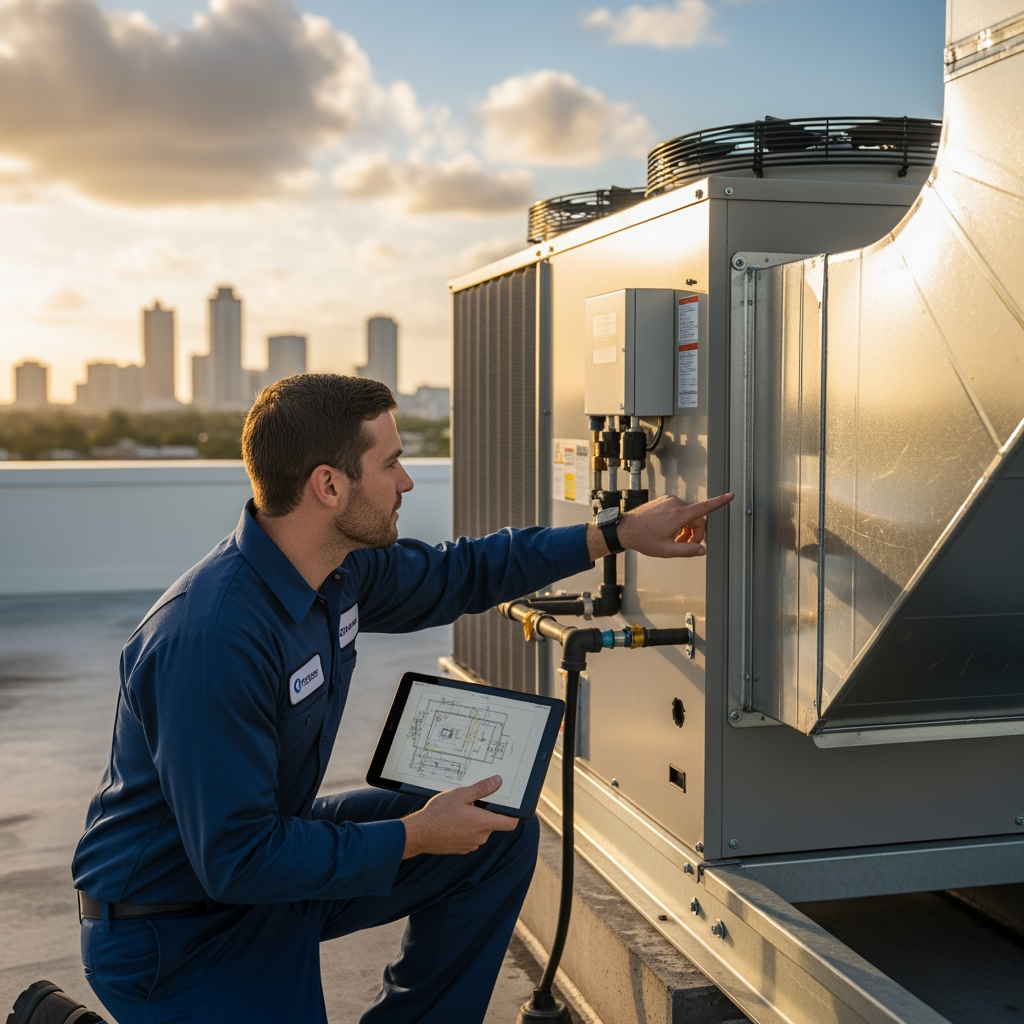
Keeping a commercial space comfortable, efficient, and code-compliant takes more than a one‑time service call — it requires a plan. If you manage a retail center, office park, or light industrial facility, understanding commercial hvac in Melbourne, FL is one of the smartest moves you can make. The right approach cuts utility costs, reduces downtime, and keeps employees and customers comfortable. For context on the community we serve, the U.S. Census Bureau provides a helpful look at local population and economic trends for Florida’s cities and counties, which affect demand and building use across the region U.S. Census Bureau.
Why commercial HVAC matters in this area
Melbourne, FL gets hot and humid for much of the year. Commercial HVAC systems here face high cooling loads, corrosive salt‑air exposure near the coast, and heavy use during peak tourist and business seasons. That combination means systems wear faster if not properly designed and maintained. Beyond comfort, HVAC affects indoor air quality, regulatory compliance, and energy bills — all critical concerns for property owners and facility managers across Melbourne, Viera, Eau Gallie, and surrounding neighborhoods.
Common commercial HVAC problems I see locally
Over a decade working with businesses in the region has shown a pattern of recurring issues. Knowing these makes it easier to prevent them or respond quickly when they occur.
- Refrigerant leaks and aging chillers: Older refrigerants and equipment lose efficiency and eventually fail, leading to higher bills and surprise downtime.
- Poor zoning and controls: Many buildings still use oversized equipment or single‑zone control, which wastes energy and creates hot or cold spots.
- Outdoor equipment corrosion: Coastal air accelerates corrosion on condensing units and metal ductwork when protective measures are missing.
- Neglected maintenance: Clogged coils, dirty filters, and misaligned belts reduce output and shorten equipment life.
Top trends shaping commercial HVAC choices in 2025
Two major trends are reshaping how businesses approach system upgrades and maintenance. First, electrification and heat pump adoption are gaining traction as property owners look for high efficiency and lower operational carbon. Modern commercial heat pumps now perform well in warm climates and can reduce energy consumption when sized correctly.
Second, smart controls and building automation are moving from “nice to have” to standard. Integrating sensors, demand-response capabilities, and cloud diagnostics reduces waste and lets technicians diagnose issues remotely, shortening repair times and minimizing interruptions to your operations.
Why these trends matter to businesses in the city
Adopting heat pumps or smart controls can translate into immediate operational benefits: lower monthly bills, predictable maintenance schedules, and performance data that reveals where upgrades pay back fastest. For leased spaces, improved HVAC performance can raise tenant satisfaction and occupancy rates. For owner‑occupied properties, upgrades increase building value and reduce long‑term capital expenditures.
How to prioritize upgrades and repairs
Not every system needs a full replacement. I recommend a tiered decision process that balances short‑term pain points with long‑term goals. Start by assessing these factors:
- Age and repair history of major equipment
- Monthly utility cost trends and peak demand charges
- Occupant comfort complaints and indoor air quality metrics
- Future plans for the building such as expansion or conversion
From there, decide whether targeted repairs, partial retrofits, or a full system replacement makes the most financial sense. Often a controls retrofit or replacing an inefficient chiller with a modern heat pump yields faster payback than a full HVAC replacement.
Preventive maintenance checklist that actually reduces downtime
Consistent, seasonal maintenance is the single best way I’ve seen to avoid emergency failures. Here is a compact checklist you or your facilities manager can use to keep commercial HVAC systems healthy across Melbourne and nearby areas.
- Quarterly filter and coil checks: Replace filters and clean coils to maintain airflow and efficiency.
- Biannual duct and insulation inspection: Prevent leaks and thermal losses that undermine cooling capacity.
- Annual refrigerant and leak testing: Early detection protects system efficiency and avoids regulatory fines.
- Control system validation: Verify thermostats, sensors, and schedules align with actual building use and occupancy.
Selecting the right contractor for commercial HVAC projects
Choosing a contractor is about more than price. You want a team that understands local climate challenges, code requirements, and the practical realities of your building type. Here’s how I guide property owners when they evaluate bids:
- Verify experience with similar buildings and systems, especially in hot, humid climates.
- Ask for references and recent project summaries that confirm timely completions and customer satisfaction.
- Confirm technician certifications and safety training for refrigerants and electrical work.
- Request a clear maintenance plan, warranty details, and a breakdown of lifecycle cost estimates.
Financing, rebates, and energy savings that improve ROI
Cost and ROI often determine whether a business moves forward with improvements. Many federal and state programs, plus utility incentives, can lower out-of-pocket costs for energy-efficient upgrades. When evaluating ROI, include:
estimated utility savings, maintenance reduction, extended equipment life, and potential tax incentives. Work with a contractor who will model savings over a 5–10 year horizon; that transparency makes budgeting decisions easier and often reveals that upgrades pay for themselves faster than expected.
Realistic cost expectations
Costs vary widely by system type, building size, and desired redundancy. Small rooftop package replacements are more affordable than central plant overhauls that require ductwork, VFD retrofits, and chilled-water distribution upgrades. I recommend getting at least three detailed proposals and asking each proposer to present lifecycle costs, not just first‑costs. That way you can compare one‑time investment versus long‑term operational savings.
How we approach problem-solving on site
When I step into a service call, I ask three practical questions: What is the immediate pain, what operating patterns cause it, and what’s the best fix for both today and tomorrow? For example, a frequently tripped condenser might need a quick compressor repair, but the underlying issue could be undersized condensers or blocked airflow. We prioritize fixes that stop business interruption first, then recommend upgrades that prevent reoccurrence.
Four steps I recommend for fast response and lasting results
Quick action reduces damage and restores comfort with minimal disruption. My typical workflow on a critical call is:
- Isolate the failing component to keep the rest of the system running.
- Perform an emergency repair to stabilize operations.
- Complete a diagnostic assessment to identify root causes.
- Provide a scoped plan for permanent repair or upgrade, including options and costs.
Local climate considerations and the impact on equipment selection
Melbourne’s coastal location means equipment selection must account for high humidity, salt air, and frequent hurricane season exposure. Specify corrosion-resistant coatings for outdoor units and consider refrigerants and compressors rated for higher ambient temperatures. Properly sized dehumidification and ventilation are also essential to control mold risk and maintain indoor air quality, especially in restaurants, medical offices, and other sensitive spaces.
Frequently asked questions I answer for facility managers
Over the years, certain questions keep coming up from property owners and facilities teams. Here are clear, practical answers.
How often should we schedule maintenance? For most commercial systems in this climate, quarterly inspections and annual full tune‑ups balance cost and reliability. Busy facilities with 24/7 operation may need monthly checks on critical equipment.
Is it time to replace or repair a failing system? Use age, repair frequency, and operating cost as your guide. If a unit is over 10–12 years old and repair costs are consistently high, replacement is usually the smarter financial move.
Will smart controls really save money? Yes, when implemented properly. Smart controls reduce wasted runtime, enable efficient scheduling, and provide data to spot inefficiencies. Payback times vary but can be rapid in large, multi-zone buildings.
Preparing for the unexpected
Unexpected failures happen. The best way to reduce risk is to combine planned maintenance with a strong emergency plan. Keep critical spare parts inventory for your most vulnerable systems, maintain vendor relationships for rapid parts and service, and document a contingency HVAC plan so operations teams know how to proceed during an outage.
Wrapping up and next steps
If you manage commercial property in Melbourne, FL, building a proactive HVAC strategy protects tenant comfort, reduces costs, and shields your investment from regional climate challenges. Start by auditing current equipment and utility bills, prioritize the highest-impact upgrades first, and look for financing or incentive opportunities to improve payback. If you want help assessing options or preparing a phased plan for upgrades and maintenance, reach out and let a local team guide you.
For a trusted partner that handles commercial HVAC, refrigeration, and operations in Melbourne and surrounding communities, contact NexTech NA to discuss needs, get a site assessment, and build a plan that fits your budget and timeline.